Housing remains one of the biggest long-term issues shaping Redwood City, and 2026 has brought several concrete developments rather than just another round of general discussion. The City Council committed nearly $13 million toward new affordable housing projects in May, while Redwood City continues implementing its broader Housing Element, tenant protections, preservation programs, and policies intended to increase housing opportunities across a high-cost Peninsula market.
For residents, the most important point is that “affordable housing” does not describe one single program. Some homes are built as fully affordable developments. Others are below-market-rate units inside larger market-rate projects. The City also funds preservation efforts intended to keep existing lower-cost homes affordable, while separate tenant programs focus on housing stability and displacement.
Here is what those changes mean in practical terms and what residents should watch next.
Why Affordable Housing Is a Major Redwood City Issue in 2026
Redwood City sits in an expensive and constrained Peninsula housing market. The City’s current 2023–2031 Housing Element sets out programs for producing and preserving both market-rate and affordable housing while meeting state housing requirements.
The City’s housing strategy therefore works through several tools at once. New residential developments can be required to include affordable units, public funds can help finance fully affordable projects, existing housing can be preserved, and tenant-focused policies can address displacement and housing stability.
Nearly $13 Million Was Committed to Two Affordable Housing Projects
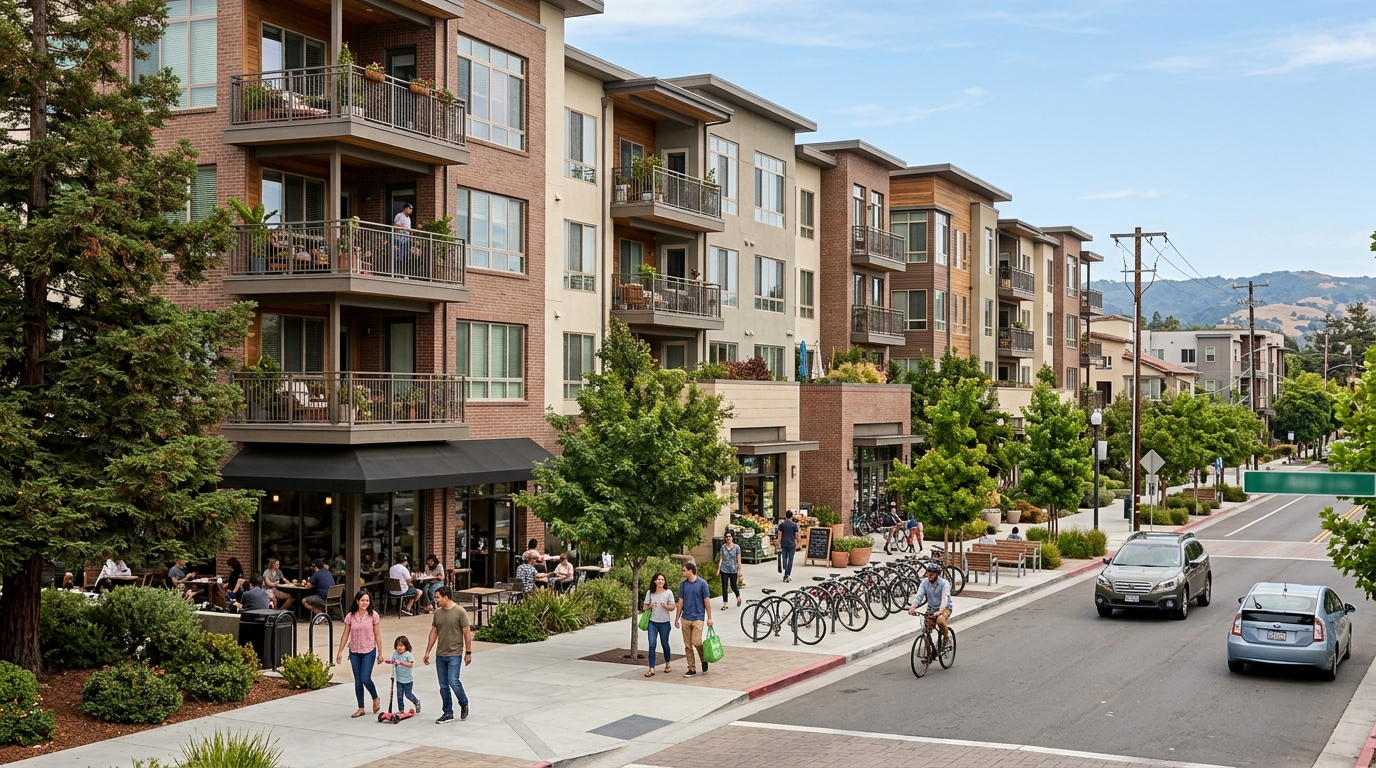
One of the biggest housing actions of 2026 came from Redwood City’s May “Housing Night.” City staff recommended approximately $12.9 million for two proposed affordable housing developments, and the City later reported that the Council had committed nearly $13 million for new affordable housing projects.
The two proposals together would support more than 170 affordable homes. One project, at 1304 Middlefield Road, is proposed as a 94-unit affordable housing development. Another, on City-owned land at 1580 Maple Street, is proposed as a 79-unit development. The projects are intended to serve households across a range of income levels.
What “Affordable” Means in Redwood City
Affordable housing is generally tied to household income limits rather than simply being an apartment with lower rent than a nearby property. Redwood City administers programs serving households from extremely low through moderate income levels, and individual developments can target different income categories.
The City identifies two major types of affordable rental housing. Subsidized affordable apartments are developed with public or other funding that helps keep rents restricted. Below-market-rate, or BMR, units are incorporated into market-rate developments and offered at reduced rents to eligible households.
Residents actively looking for affordable housing should use the City of Redwood City affordable housing resources. The City provides information about subsidized housing and Doorways, the regional system it uses for BMR rental opportunities.
Market-Rate Development Also Contributes Affordable Units
Affordable housing production is not limited to fully subsidized projects. Redwood City’s Affordable Housing Ordinance generally requires residential developments with 20 or more units to provide affordable housing onsite. Under the current ordinance, rental projects are generally required to make 20 percent of units affordable across moderate-, low-, and very-low-income levels, while qualifying ownership projects generally set aside 15 percent for moderate-income households.
The City also has a temporary incentive program intended to encourage residential pipeline projects to move toward construction. That program can reduce certain local affordable-housing requirements by 25 percent for eligible projects meeting specific entitlement and building-permit deadlines, although state density-bonus requirements may still apply.
Downtown and City-Owned Land Could Add More Housing
Another important 2026 housing discussion involves land the City already controls. During the May housing meeting, Redwood City considered an initial concept for redeveloping Downtown Library Parking Lot B at 1016 Middlefield Road as a mixed-use affordable housing site.
The early concept could provide roughly 70 to 104 affordable homes while preserving a significant portion of public parking and including limited space for City use. This is not yet a completed project or final design. It is an example of how the City can evaluate strategically located public land for housing while balancing existing civic functions.
That location is especially notable because it sits within the broader Downtown environment. Housing added near civic facilities, restaurants, transit, jobs, and services can support a more active city center while giving future residents access to daily needs without requiring every trip to begin with a car.
Readers following the future of the city center should also see our Redwood City Greater Downtown Area Plan overview. The Downtown planning process is broader than housing, but housing supply, transit access, public spaces, retail, and neighborhood connections are closely related.
More Homes Can Change How Downtown Functions
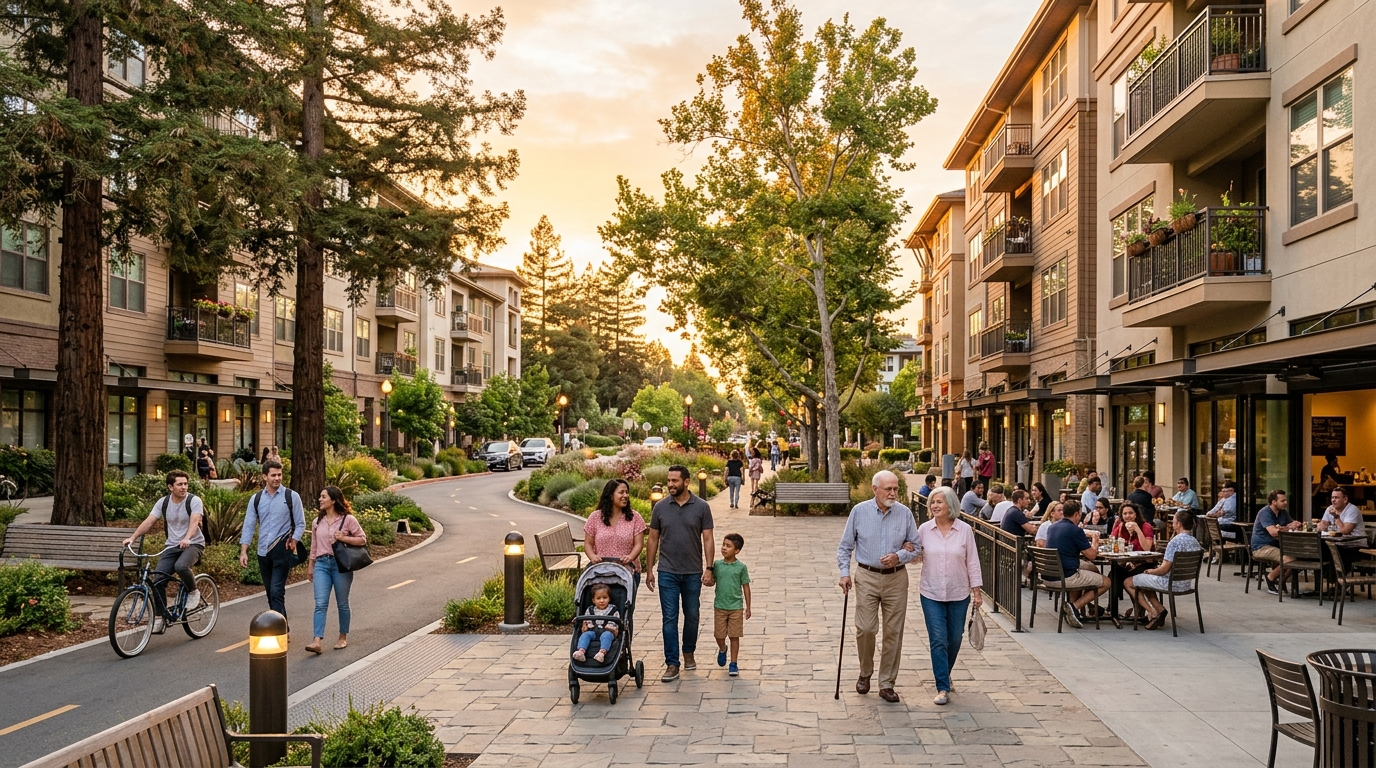
Housing near Downtown does more than increase the number of addresses on a map. Residents create demand throughout the day for food, coffee, parks, services, transit, and neighborhood businesses. That can help Downtown operate as a mixed-use neighborhood rather than primarily as a destination for office workers or special events.
Someone living within walking distance of the city center may use a local coffee shop in the morning, visit nearby services during the day, walk to a Redwood City restaurant in the evening, or attend community programming at Courthouse Square without needing to drive between each stop.
At the same time, more housing also raises practical questions about infrastructure, parking, school enrollment, street safety, public space, and neighborhood character. Those are legitimate planning issues, which is why the location and design of new housing matter alongside the raw unit count.
Housing Policy Is Also About Keeping Existing Residents Housed
New construction receives the most visible attention, but Redwood City’s housing work also includes preservation and tenant stability. Producing new homes takes time, and losing existing affordable or lower-cost housing can undermine progress if current residents are displaced faster than new units become available.
Preservation and Tenant Protection Are Part of the Same Housing Story
Redwood City’s Housing Preservation Program is designed to prevent displacement by helping preserve existing multifamily rental properties as deed-restricted affordable housing or extend affordability restrictions that are nearing expiration. The City reported that its first preservation project protected eight units at 417 Stambaugh Street.
Redwood City also adopted a Tenant Protection Ordinance that took effect January 1, 2026. The City has continued developing administrative rules and implementation resources during the year. These policies address a different part of the housing problem than new development: the stability of people already renting in the community.
For someone looking for affordable housing now, future construction announcements are not the same as current availability. The most useful step is to follow the City’s official housing notification resources and the Doorways system rather than assuming that a proposed development is already accepting applications.
What Residents Should Watch Through the Rest of 2026
Several housing questions remain important during the rest of the year. Watch whether the two newly funded affordable projects move successfully through their next financing and development steps, whether the Downtown Library parking-lot concept advances toward a formal development process, and how the Greater Downtown planning effort treats future residential growth.
It is also worth watching Redwood City’s implementation of its Housing Element and local development rules. The City’s policies determine not only how much housing can be built but also where different types of projects are feasible, how affordable units are incorporated, and what standards new residential and mixed-use buildings must meet.
For prospective renters, affordable housing notifications are more useful than headlines alone. For existing residents, tenant resources and preservation programs may matter more immediately. Homeowners, accessory dwelling units and housing-related development rules can create another layer of opportunity.
The larger story is that Redwood City is not relying on one project to solve its housing challenge. The nearly $13 million committed in 2026 is significant, but it sits within a broader system of public investment, development requirements, preservation programs, tenant protections, and long-range planning.
Housing will continue to influence how Redwood City grows, how Downtown changes, who can remain in the community, and how local businesses and public spaces are used. The projects announced this year are therefore worth following not only as construction stories but as part of the city’s changing everyday life.
For more local development, neighborhood, business, and community coverage, visit the Redwood City Living blog. You can also read our guide to Redwood City summer events in 2026 for a look at what is happening around the city right now.